
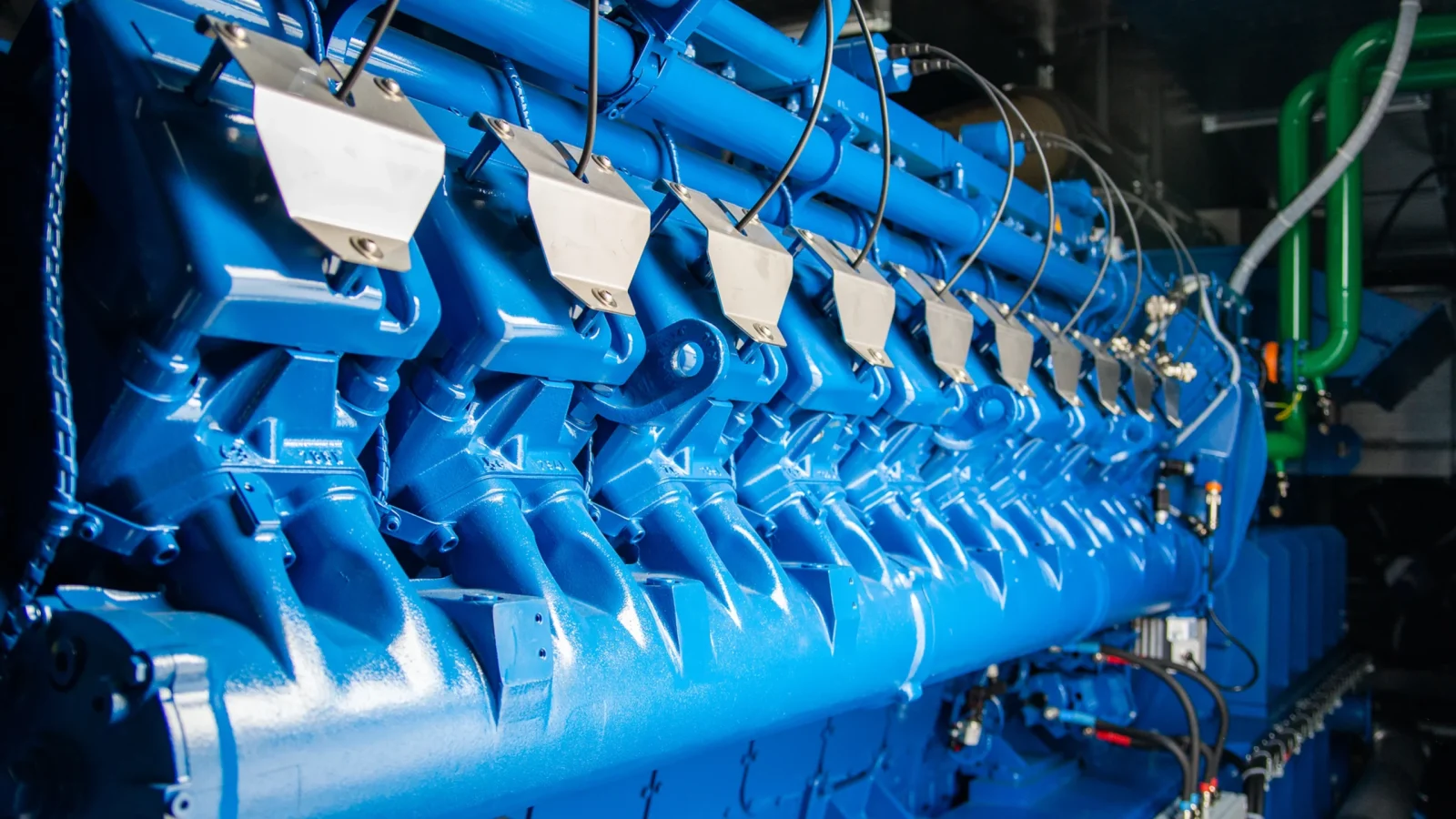
They are environmentally friendly, reduce ongoing energy costs and conserve resources: Combined Heat and Power Units (CHP). It is not surprising that the number of CHP units on the energy market are steadily increasing. But: A CHP should not be built too quickly and without the appropriate planning. The apparent complexity of CHP technology in particular can often be confusing, and the laws governing the promotion of CHP often act as a deterrent. This does not need to be a problem as long as you have a competent partner for the design, planning and construction process of a CHP plant at your side.
CHPs are not the ideal solution for every business. To justify the considerable effort required to install a CHP unit, there should be a minimum constant demand for electricity and heat. This lower benchmark should be no less than 15000 MW per year electrical, and about 10000 MW thermal power p.a. This ensures that the CHP is economically reasonable.
In addition to their environmental friendliness and minimised CO2 emissions, the reduced use of primary energy is also a major advantage of CHP technology. It conserves resources and reduces ongoing energy costs. In addition to all the advantages, however, a CHP also has disadvantages. One is the high purchase price which is significantly higher than for other heating systems. Compared to a boiler, a CHP unit also requires more maintenance because the technology is more complex.
At this point in time Kent-based 4CleanTech comes into play.
4CleanTech offers to design, purchase, monitor and maintain CHP units for energy-intensive businesses. The costumer’s energy supply remains secure and energy costs are reduced by up to 40%.


